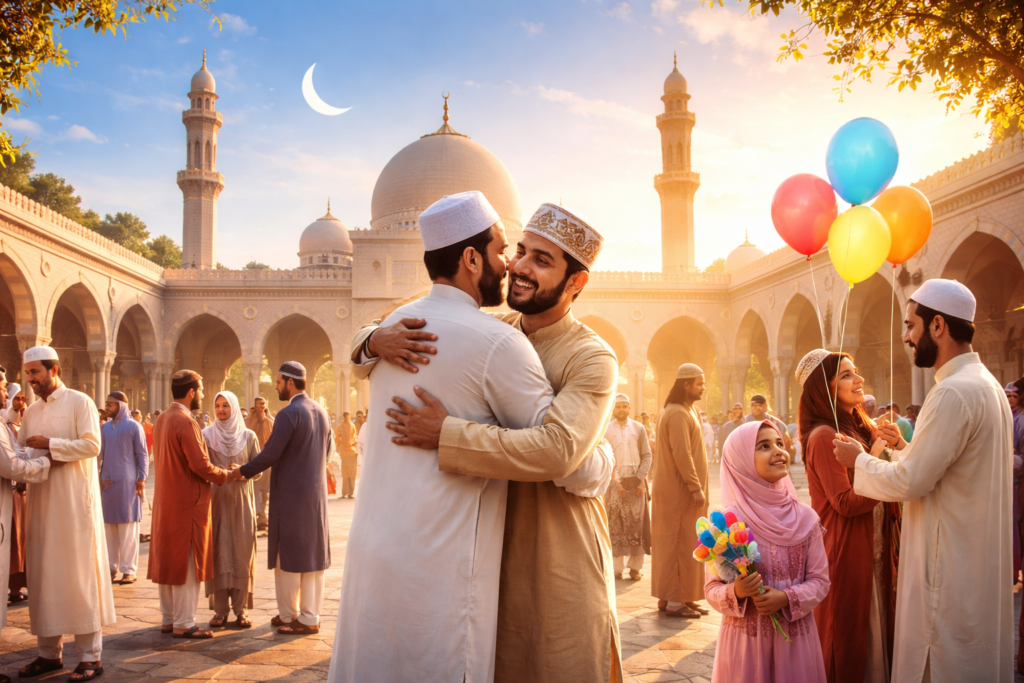
Eid ul-Fitr: Celebrating the Spiritual Victory of Ramadan
A Day of Joy After a Month of Devotion
Eid ul-Fitr is not merely a festival—it is the culmination of a deeply transformative spiritual journey undertaken during the blessed month of Ramadan. After 29 or 30 days of fasting, prayer, self-discipline, and reflection, Muslims around the world gather to celebrate a day that symbolizes gratitude, unity, and spiritual renewal.
This sacred occasion marks the end of Ramadan, a month in which believers strive to purify their hearts, strengthen their connection with Allah, and develop a deeper sense of empathy for those less fortunate.
The Spiritual Significance of Ramadan
Before understanding Eid ul-Fitr, one must appreciate the profound essence of Ramadan.
Ramadan is a month of:
-
Fasting (Sawm): Abstaining from food, drink, and desires from dawn to sunset
-
Qur’an Reflection: Strengthening one’s relationship with the Holy Qur’an
-
Increased Worship: Engaging in Salah, Dhikr, and Tahajjud
-
Charity (Sadaqah & Zakat): Supporting the needy and purifying wealth
Allah says in the Qur’an:
“O you who have believed, decreed upon you is fasting as it was decreed upon those before you that you may become righteous.” (Qur’an 2:183)
Ramadan is ultimately about achieving Taqwa (God-consciousness)—a state of heightened awareness of Allah in every aspect of life.
Eid ul-Fitr: The Reward for Spiritual Effort
Eid ul-Fitr, often called the “Festival of Breaking the Fast,” is a divine gift after the intense devotion of Ramadan.
It is a day that represents:
-
Spiritual success after a month of discipline
-
Forgiveness and mercy from Allah
-
Renewal of faith and intentions
-
Gratitude for the strength to complete Ramadan
The Prophet Muhammad ﷺ said:
“The fasting person has two moments of joy: one when he breaks his fast and one when he meets his Lord.” (Bukhari & Muslim)
Eid is the worldly manifestation of that joy.
The Night Before Eid: A Time for Reflection
The night before Eid, known as Chand Raat, is often filled with excitement. However, spiritually, it is also a critical moment.
Scholars emphasize:
-
Continuing Dhikr and Dua
-
Seeking forgiveness
-
Reflecting on whether Ramadan truly transformed us
It is reported that the Prophet ﷺ encouraged believers not to neglect worship on the night of Eid.
Zakat al-Fitr: Purification Before Celebration
One of the most essential components of Eid ul-Fitr is Zakat al-Fitr.
What is Zakat al-Fitr?
It is a mandatory charity given before Eid prayer, intended to:
-
Purify any shortcomings in fasting
-
Ensure that even the poor can celebrate Eid
The Prophet ﷺ said:
“Zakat al-Fitr is a purification for the fasting person from idle talk and obscenities and food for the poor.” (Abu Dawood)
Key Rules:
-
Must be given before Eid prayer
-
Applicable to every Muslim, including children (paid by guardians)
-
Given in the form of staple food or its equivalent value
The Sunnah Practices of Eid ul-Fitr
Eid is not just a cultural celebration—it is deeply rooted in the Sunnah of the Prophet ﷺ.
1. Performing Ghusl (Ritual Bath)
Purifying oneself physically before the day begins.
2. Wearing Best Clothes
Presenting oneself in a clean and dignified manner.
3. Eating Before Eid Prayer
Unlike Eid ul-Adha, it is Sunnah to eat (preferably dates) before leaving for prayer.
4. Reciting Takbeer
From the night of Eid until the prayer:
“Allahu Akbar, Allahu Akbar, La ilaha illa Allah…”
5. Attending Eid Prayer
A congregational prayer that symbolizes unity and collective gratitude.
Eid Prayer: A Gathering of Unity
The Eid prayer is one of the most beautiful manifestations of the Muslim Ummah’s unity.
-
Performed in large congregations
-
Followed by a Khutbah (sermon)
-
Encourages forgiveness, compassion, and social harmony
It reminds believers that Islam is not just an individual faith but a communal way of life.
Celebrating Eid: Beyond Festivities
While Eid includes joy, food, and gatherings, its true essence lies in:
1. Gratitude to Allah
Recognizing that the ability to fast and worship was itself a blessing.
2. Strengthening Family Ties
Visiting relatives and maintaining relationships (Silat-ur-Rahm).
3. Forgiveness and Reconciliation
Letting go of grudges and starting fresh.
4. Helping the Less Fortunate
Ensuring no one is left behind in celebration.
Maintaining Ramadan’s Spirit After Eid
One of the biggest challenges is preserving the spiritual momentum built during Ramadan.
Key Practices to Continue:
-
Daily Qur’an recitation
-
Voluntary fasting (e.g., 6 days of Shawwal)
-
Regular charity
-
Consistent Salah and Dhikr
Allah loves consistency, even in small deeds.
The Prophet ﷺ said:
“The most beloved deeds to Allah are those that are consistent, even if they are small.” (Bukhari)
Common Mistakes to Avoid on Eid
Despite its joy, some practices can contradict the spirit of Eid:
-
Excessive extravagance or wastefulness
-
Neglecting prayers
-
Engaging in gossip or sinful behavior
-
Forgetting the purpose of Ramadan
Eid should reflect the discipline gained—not erase it.
Eid ul-Fitr in the Modern World
In today’s fast-paced, digital age, Eid celebrations have evolved, but its core values remain unchanged.
Muslims now:
-
Connect globally through technology
-
Share greetings across continents
-
Support charities online
Yet, the essence remains rooted in faith, gratitude, and community.
A Universal Message of Unity and Compassion
Eid ul-Fitr transcends cultural boundaries. It is celebrated by Muslims of all backgrounds, languages, and ethnicities.
It reminds us:
-
We are part of one Ummah
-
Compassion is at the heart of Islam
-
Spiritual growth is a lifelong journey
Conclusion: Eid as a New Beginning
Eid ul-Fitr is not the end of Ramadan—it is the beginning of a renewed spiritual path.
It is a day to:
-
Celebrate achievements
-
Seek continued guidance
-
Commit to lifelong growth
As we say “Eid Mubarak,” we are not just exchanging greetings—we are sharing prayers for acceptance, peace, and blessings.