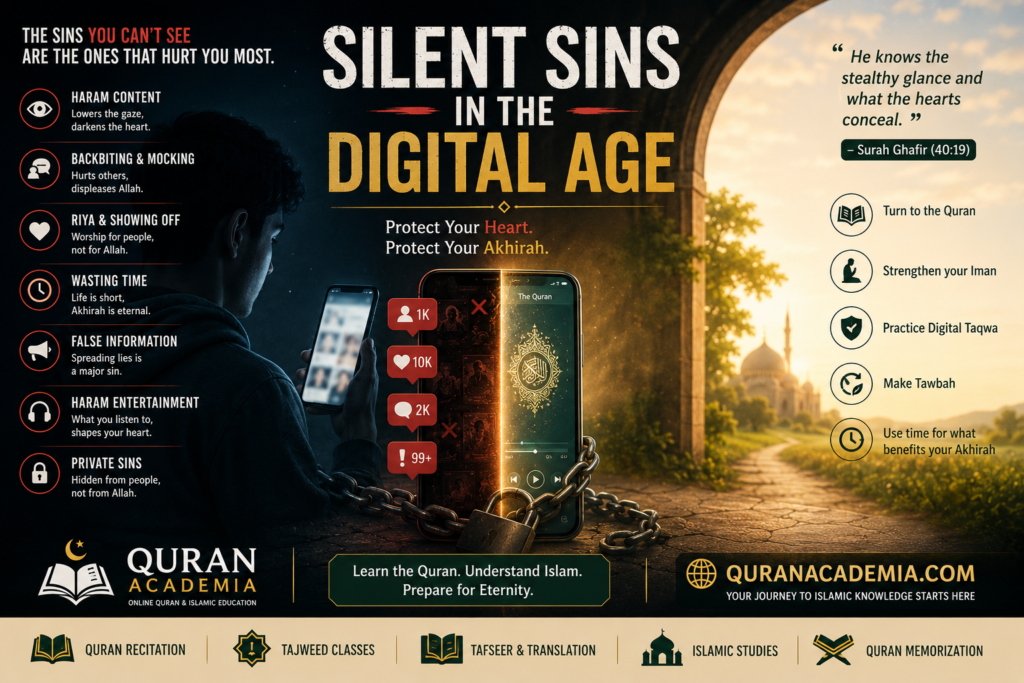
Silent Sins in the Digital Age
The Hidden Spiritual Dangers Muslims Must Watch Out For
In today’s hyperconnected world, sins are no longer limited to physical spaces. A smartphone in the hand can become a gateway to both immense الخير (good) and hidden spiritual destruction. While technology itself is not evil, the digital age has normalized many silent sins that slowly damage the heart, weaken iman, and distance believers from Allah SWT.
Many Muslims avoid major public sins yet unknowingly engage daily in private digital sins:
- Endless inappropriate scrolling
- Backbiting online
- Consuming haram content
- Showing off acts of worship
- Wasting hours in distraction
- Spreading misinformation
- Engaging in toxic comment culture
These sins may appear “small,” but repeated hidden sins darken the heart over time.
At QuranAcademia.com, we believe Muslims must develop digital awareness alongside Islamic knowledge to protect their faith in modern times.
What Are Silent Sins?
Silent sins are sins people often commit privately, casually, or without realizing their spiritual consequences. They may not attract public attention, but Allah SWT sees every click, message, search, comment, and intention.
Allah says:
“He knows the stealthy glance and what the hearts conceal.”
— Surah Ghafir (40:19)
In the digital age, this verse feels more relevant than ever.
A believer may hide browser history from people, but nothing remains hidden from Allah.
Why the Digital Age Makes Sin More Dangerous
Technology has changed how temptation reaches people:
- Instant access
- Private consumption
- Endless entertainment
- Constant distractions
- Anonymous interactions
- Normalization of haram
The danger is not only committing sins — it is becoming spiritually numb to them.
The Prophet ﷺ said:
“When a servant commits a sin, a black dot appears on his heart…”
— Jami’ at-Tirmidhi
Repeated sins without repentance gradually harden the heart.
Common Silent Sins Muslims Face Online
1. Consuming Haram Content
One of the greatest digital fitnahs is easy access to inappropriate content.
Allah commands believers:
“Tell the believing men to lower their gaze and guard their chastity…”
— Surah An-Nur (24:30)
Lowering the gaze now includes:
- Social media feeds
- Streaming platforms
- Ads
- Short-form videos
- Private chats
Even “just looking” affects the heart and spiritual purity.
2. Backbiting and Mocking Others Online
Comment sections and group chats have normalized:
- Gossip
- Mockery
- Cancel culture
- Humiliation
- Sarcasm
- Public shaming
Allah says:
“And do not backbite one another…”
— Surah Al-Hujurat (49:12)
A single viral comment can become a source of major sin.
Many people type words online they would never say face-to-face.
3. Showing Off (Riya) on Social Media
Not every Islamic post is sincere.
Sometimes acts of worship become content for validation:
- Filming charity for praise
- Posting worship for attention
- Seeking admiration through deen
The Prophet ﷺ warned about riya because it destroys sincerity.
A believer must constantly ask:
“Am I doing this for Allah or for people?”
4. Wasting Time Endlessly
One of the most overlooked sins today is wasting life itself.
Hours disappear through:
- Endless scrolling
- Binge watching
- Gaming addiction
- Meaningless content
- Doomscrolling
The Prophet ﷺ said:
“There are two blessings which many people waste: health and free time.”
— Sahih al-Bukhari
Time is part of our accountability before Allah.
5. Listening to Haram and Spiritually Corrupt Content
What enters the ears affects the heart.
Constant exposure to:
- Vulgar speech
- Immoral entertainment
- Explicit music
- Toxic influencers
- Negative podcasts
can slowly normalize disobedience and weaken spiritual sensitivity.
The heart absorbs what it repeatedly consumes.
6. Private Sins Done in Secret
The internet creates the illusion of privacy.
But Allah SWT sees:
- Secret messages
- Hidden tabs
- Anonymous accounts
- Private sins at night
The Prophet ﷺ warned about people who appear righteous publicly but privately destroy themselves through hidden sins.
This is one of the greatest spiritual dangers of the digital age.
7. Spreading False Information
Islam strongly warns against forwarding unverified information.
Allah says:
“O believers! If a wicked person brings you news, verify it…”
— Surah Al-Hujurat (49:6)
Today, many people:
- Share fake Islamic quotes
- Spread misinformation
- Repost unauthenticated hadith
- Forward rumors instantly
A Muslim must verify before sharing.
The Spiritual Effects of Silent Sins
Silent sins may not immediately destroy someone outwardly, but spiritually they cause:
- Weak iman
- Loss of barakah
- Hardness of heart
- Reduced khushu in salah
- Distance from Quran
- Anxiety and emptiness
- Decreased love for worship
One of the signs of spiritual illness is when sins stop feeling serious.
How Silent Sins Destroy the Heart Slowly
Sin rarely destroys faith overnight.
Instead:
- One glance becomes a habit
- One compromise becomes normalization
- One hidden sin becomes addiction
Shaytan works gradually.
Allah says:
“Do not follow the footsteps of Shaytan…”
— Surah Al-Baqarah (2:168)
Notice the word “footsteps.” Spiritual decline often happens step by step.
Protecting Yourself in the Digital Age
1. Strengthen Your Relationship With the Quran
The Quran purifies the heart and protects believers from corruption.
Daily Quran recitation creates spiritual clarity in a noisy digital world.
At QuranAcademia.com, students learn:
- Quran recitation
- Tajweed
- Tafsir
- Islamic studies
- Quran memorization
Islamic knowledge helps Muslims navigate modern fitnah wisely.
2. Control What You Consume
Ask yourself:
- Does this content bring me closer to Allah?
- Does it increase knowledge or distraction?
- Would I be comfortable if this appeared on my scale of deeds?
Your feed shapes your heart.
Unfollow accounts that damage your iman.
3. Practice Digital Taqwa
Taqwa means being conscious of Allah even when nobody sees you.
True sincerity appears in private moments:
- Late-night scrolling
- Secret browsing
- Private conversations
- Online interactions
A believer remembers:
“Allah sees me.”
4. Make Tawbah Constantly
Every Muslim sins.
But the best believers return quickly to Allah.
The Prophet ﷺ said:
“Every son of Adam sins, and the best sinners are those who repent.”
— Jami’ at-Tirmidhi
Never allow Shaytan to convince you that you are too far gone.
Allah’s mercy is greater than every sin.
5. Replace Harmful Content With Beneficial Knowledge
Instead of endless distraction:
- Listen to Quran
- Study tafsir
- Learn hadith
- Attend Islamic classes
- Read beneficial reminders
The internet can either elevate your akhirah or destroy it.
Choose carefully.
The Danger of Normalized Sin
One of the biggest problems today is that many sins no longer feel sinful.
Society celebrates:
- Immodesty
- Arrogance
- Vanity
- Fame obsession
- Public humiliation
- Addictive entertainment
But Islam teaches believers to protect the heart from spiritual corrosion.
A clean heart is more valuable than online popularity.
Allah Knows the Hidden and the Public
Many people maintain a religious appearance publicly while battling hidden digital sins privately.
But Islam is not about appearances alone.
Allah says:
“On the Day when secrets will be exposed.”
— Surah At-Tariq (86:9)
This verse reminds believers to focus on sincerity and purification of the heart.
Final Reminder
The digital world is temporary.
Your soul is eternal.
Every scroll, click, comment, and intention is being recorded.
Technology itself is not the enemy — unchecked desires are.
The believer in the digital age must fight a new kind of jihad:
Protecting the heart in a world full of distractions.
May Allah protect us from hidden sins, purify our hearts, strengthen our iman, and make technology a source of goodness rather than regret on the Day of Judgment. Ameen.