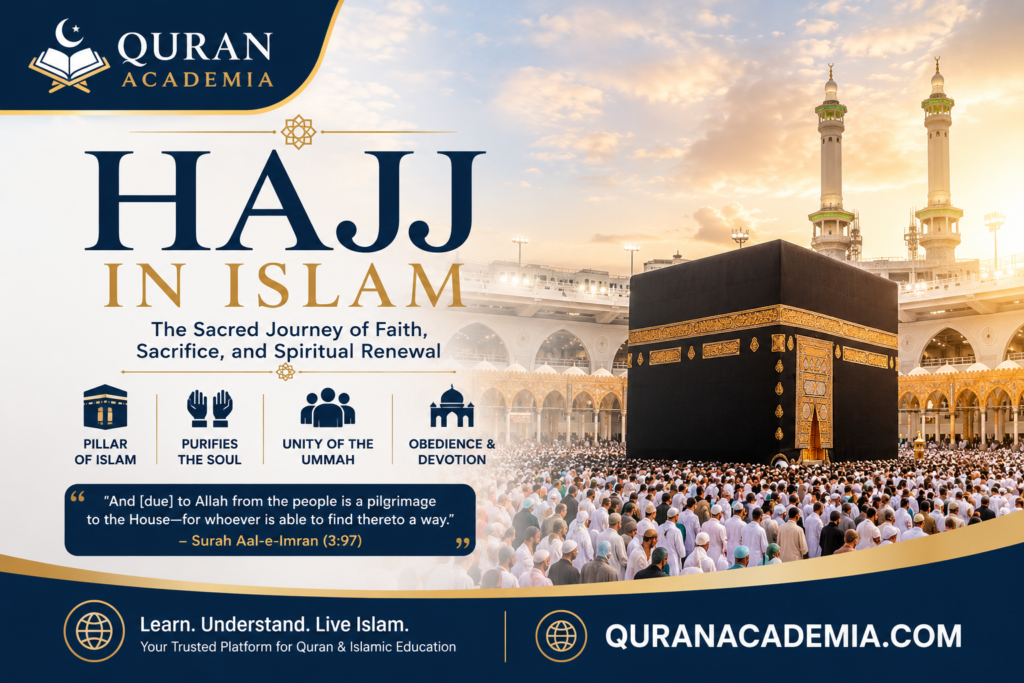
Hajj in Islam: The Sacred Journey of Faith, Sacrifice, and Spiritual Renewal
Hajj is one of the greatest acts of worship in Islam and a life-changing spiritual journey for millions of Muslims around the world. Every year, believers travel to the holy city of Makkah to fulfill the fifth pillar of Islam, seeking forgiveness, mercy, and closeness to Allah (SWT).
For Muslims, Hajj is not merely a physical pilgrimage—it is a profound journey of purification, unity, obedience, and devotion. This sacred pilgrimage reminds believers of the legacy of Prophet Ibrahim (AS), Prophet Ismail (AS), and Hajar (RA), whose unwavering faith became an eternal symbol of submission to Allah.
In this comprehensive guide by QuranAcademia.com, we will explore the importance of Hajj in Islam, its history, rituals, benefits, and lessons every Muslim should understand.
What Is Hajj in Islam?
Hajj is the annual Islamic pilgrimage to Masjid al-Haram in Makkah and is obligatory once in a lifetime for every financially and physically capable Muslim.
Allah says in the Quran:
“And [due] to Allah from the people is a pilgrimage to the House—for whoever is able to find thereto a way.”
— Surah Aal-e-Imran (3:97)
Hajj takes place during the Islamic month of Dhul Hijjah, specifically from the 8th to the 13th of Dhul Hijjah.
It is one of the Five Pillars of Islam alongside:
- Shahadah (Faith)
- Salah (Prayer)
- Zakah (Charity)
- Sawm (Fasting in Ramadan)
- Hajj (Pilgrimage)
The History of Hajj
The origins of Hajj trace back to Prophet Ibrahim (AS), who was commanded by Allah to leave his wife Hajar (RA) and infant son Ismail (AS) in the barren desert of Makkah.
When water ran out, Hajar (RA) desperately ran between the hills of Safa and Marwah searching for help. Allah rewarded her trust by causing the blessed well of Zamzam to spring forth.
Later, Allah commanded Prophet Ibrahim (AS) and Prophet Ismail (AS) to build the Kaaba:
“And [mention] when Ibrahim was raising the foundations of the House and [with him] Ismail…”
— Surah Al-Baqarah (2:127)
Today, Muslims performing Hajj commemorate these acts of sacrifice and faith through the rituals of pilgrimage.
Importance of Hajj in Islam
Hajj holds immense spiritual significance in Islam. It is a journey that cleanses sins, strengthens faith, and unites Muslims from every nation, race, and background.
1. Hajj Is a Pillar of Islam
The Prophet Muhammad ﷺ said:
“Islam is built upon five… including Hajj to the House for whoever is able to find a way.”
— Sahih al-Bukhari & Sahih Muslim
This highlights the mandatory nature of Hajj for eligible Muslims.
2. Hajj Purifies Sins
The Messenger of Allah ﷺ said:
“Whoever performs Hajj and does not commit any obscenity or transgression will return as free from sins as the day his mother gave birth to him.”
— Sahih al-Bukhari
Hajj offers Muslims a chance for complete spiritual renewal.
3. Hajj Teaches Equality
During Hajj, all pilgrims wear simple white garments called Ihram. Rich and poor, kings and workers stand side by side worshipping Allah together.
This demonstrates the equality of humanity before Allah.
Main Rituals of Hajj
1. Entering the State of Ihram
Pilgrims enter a sacred spiritual state known as Ihram before arriving in Makkah. Men wear two white unstitched cloths, while women dress modestly.
Pilgrims continuously recite the Talbiyah:
“Labbayk Allahumma Labbayk…”
Meaning:
“Here I am, O Allah, here I am.”
2. Tawaf Around the Kaaba
Pilgrims perform Tawaf by circling the Kaaba seven times in worship and devotion.


The Kaaba is the Qiblah (direction of prayer) for Muslims worldwide and symbolizes unity in worship.
3. Sa’i Between Safa and Marwah
Pilgrims walk seven times between the hills of Safa and Marwah, honoring the struggle of Hajar (RA).
This act teaches patience, trust in Allah, and perseverance during hardship.
4. Standing at Arafah
The Day of Arafah is the most important part of Hajj. Pilgrims gather at the plain of Arafah in prayer, repentance, and remembrance of Allah.
The Prophet ﷺ said:
“Hajj is Arafah.”
— Sunan al-Tirmidhi


This day symbolizes the gathering of humanity on the Day of Judgment.
5. Muzdalifah and Mina
Pilgrims spend the night in Muzdalifah collecting pebbles and later travel to Mina to perform the symbolic stoning of Shaytan.
This act represents rejecting evil, temptation, and disobedience to Allah.
6. Qurbani (Sacrifice)
Pilgrims sacrifice an animal in remembrance of Prophet Ibrahim’s (AS) willingness to sacrifice his son for Allah’s command.
Allah replaced Ismail (AS) with a ram, demonstrating divine mercy and reward for obedience.
Spiritual Benefits of Hajj
Strengthens Faith
Hajj reconnects Muslims with Allah through worship, dua, and repentance.
Encourages Patience
The pilgrimage requires endurance, discipline, and humility.
Promotes Brotherhood
Millions of Muslims gather regardless of nationality, language, or status, showcasing the unity of the Ummah.
Inspires Positive Change
Many Muslims return from Hajj spiritually transformed and committed to living a more righteous life.
Difference Between Hajj and Umrah
Many people confuse Hajj and Umrah, but they are different acts of worship.
| Hajj | Umrah |
|---|---|
| Obligatory once in a lifetime (if able) | Sunnah and voluntary |
| Performed during Dhul Hijjah | Can be performed anytime |
| Includes Arafah, Mina, and sacrifice rituals | Shorter pilgrimage |
| Takes several days | Usually completed in a few hours |
Lessons Muslims Learn from Hajj
Complete Submission to Allah
Hajj teaches believers to obey Allah even when they do not fully understand the wisdom behind certain commands.
The Temporary Nature of Life
The white Ihram garments resemble burial shrouds, reminding Muslims of death and accountability.
Unity of the Muslim Ummah
Hajj demonstrates the beauty of global Islamic brotherhood.
Gratitude and Humility
Pilgrims appreciate Allah’s blessings and recognize their dependence on Him.
Hajj in the Quran
The Quran repeatedly emphasizes the importance of pilgrimage:
“And proclaim to the people the Hajj; they will come to you on foot and on every lean camel…”
— Surah Al-Hajj (22:27)
This verse reflects the timeless call to pilgrimage that continues today with millions answering Allah’s invitation every year.
Preparing for Hajj Spiritually
Before going for Hajj, Muslims should:
- Make sincere Tawbah (repentance)
- Learn the rituals properly
- Clear debts and fulfill obligations
- Improve character and relationships
- Increase Quran recitation and dua
Studying Islam and understanding the meaning of worship helps pilgrims maximize the spiritual rewards of Hajj.
You can explore Islamic learning resources at QuranAcademia.com to deepen your understanding of Islam, Quran, and worship.
Final Thoughts
Hajj is one of the most beautiful and transformative journeys in Islam. It is a sacred invitation from Allah that strengthens faith, purifies the soul, and unites Muslims worldwide in worship and devotion.
The rituals of Hajj are filled with timeless lessons of sacrifice, patience, obedience, and trust in Allah. Whether a Muslim has already performed Hajj or dreams of going one day, reflecting on its meanings can inspire spiritual growth and a stronger connection with Allah.
May Allah grant every Muslim the opportunity to perform Hajj with sincerity and acceptance. Ameen.