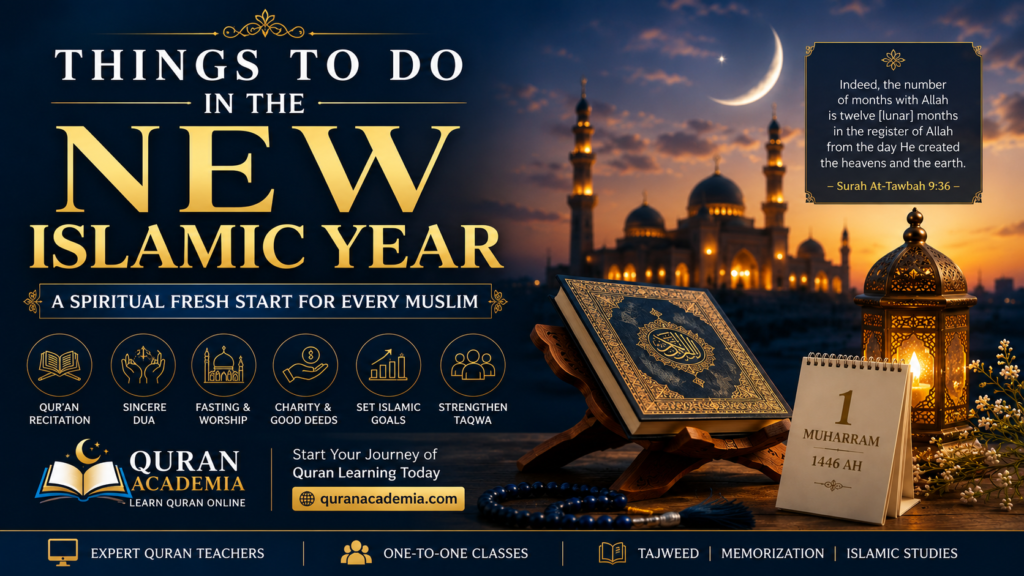
Things to Do in the New Islamic Year: A Spiritual Fresh Start for Every Muslim
The beginning of the Islamic New Year, also known as the Hijri New Year or Islamic Calendar Year, is a beautiful reminder for Muslims to reflect, renew intentions, and reconnect with Allah سبحانه وتعالى. Unlike worldly celebrations that focus mainly on entertainment, the Islamic New Year encourages spiritual growth, gratitude, repentance, and self-improvement.
The first month of the Islamic calendar is Muharram, one of the four sacred months mentioned in the Qur’an. It marks the migration (Hijrah) of Prophet Muhammad ﷺ from Makkah to Madinah—a turning point in Islamic history that symbolizes sacrifice, faith, and reliance upon Allah.
For Muslims around the world, the New Islamic Year is an opportunity to begin anew with stronger faith, better habits, and sincere worship. In this guide by quranacademia.com, we will explore meaningful things to do in the New Islamic Year according to the Qur’an and authentic Sunnah.
What Is the Islamic New Year?
The Islamic New Year begins with the month of Muharram, the first month in the Hijri calendar. The Hijri calendar was established during the caliphate of Umar ibn Al-Khattab رضي الله عنه and begins from the year of the Hijrah of Prophet Muhammad ﷺ.
Allah says in the Qur’an:
“Indeed, the number of months with Allah is twelve [lunar] months in the register of Allah from the day He created the heavens and the earth; of these, four are sacred.”
(Surah At-Tawbah 9:36)
Muharram is one of these sacred months.
The Prophet ﷺ said:
“The best fasting after Ramadan is fasting in the month of Allah, Muharram.”
(Sahih Muslim)
This shows the spiritual importance and blessings connected to the Islamic New Year.
Why Muslims Should Reflect During the Islamic New Year
The New Hijri Year is not merely a date change. It is a time to:
- Reflect on the passing year
- Repent for sins
- Set Islamic goals
- Increase worship
- Strengthen connection with the Qur’an
- Improve character and relationships
- Prepare for the Hereafter
The migration of the Prophet ﷺ teaches Muslims valuable lessons of patience, sacrifice, trust in Allah, and commitment to Islam.
1. Begin the New Islamic Year With Sincere Tawbah (Repentance)
One of the best things to do in the Islamic New Year is to sincerely repent to Allah.
Every person makes mistakes, but Allah’s mercy is greater than all sins. Starting the year with a clean heart and sincere repentance brings peace and blessings.
Allah says:
“And turn to Allah in repentance, all of you, O believers, that you might succeed.”
(Surah An-Nur 24:31)
How to make sincere tawbah:
- Admit your mistakes
- Feel regret for sins
- Stop committing the sin
- Ask Allah for forgiveness
- Intend never to return to the sin
Repeat “Astaghfirullah” abundantly throughout the day.
2. Set Powerful Islamic Goals for the New Year
The Islamic New Year is the perfect time to set faith-centered goals instead of only worldly ambitions.
Examples of Islamic goals:
- Pray all five daily prayers on time
- Read Qur’an daily
- Memorize new surahs
- Wake up for Tahajjud
- Give regular charity
- Improve patience and manners
- Avoid backbiting and gossip
- Learn more about Islam
Write down your goals and make dua for consistency.
The Prophet ﷺ said:
“The most beloved deeds to Allah are those that are consistent, even if they are small.”
(Sahih al-Bukhari)
3. Increase Your Connection With the Qur’an
A new year should bring a renewed relationship with the Book of Allah.
The Qur’an is guidance, healing, mercy, and light for believers. Many Muslims promise themselves every year that they will become closer to the Qur’an but delay it repeatedly.
Make this year different.
Ideas to reconnect with the Qur’an:
- Read one page daily
- Study tafsir
- Listen to recitation
- Join online Quran classes
- Memorize short surahs
- Teach children the Qur’an
Allah says:
“Indeed, this Qur’an guides to that which is most suitable.”
(Surah Al-Isra 17:9)
At quranacademia.com, students of all ages can strengthen their Quran recitation, tajweed, memorization, and Islamic knowledge through structured learning.
4. Fast During Muharram
Fasting during Muharram is among the greatest acts of worship in the Islamic New Year.
The Prophet ﷺ especially encouraged fasting on the Day of Ashura (10th Muharram).
Ibn Abbas رضي الله عنه reported:
“I never saw the Messenger of Allah ﷺ so keen to fast any day and give it priority over any other than this day, the Day of Ashura.”
(Sahih al-Bukhari)
Benefits of fasting Ashura:
- Expiation of sins from the previous year
- Spiritual purification
- Increased taqwa
- Following the Sunnah
The Prophet ﷺ said:
“Fasting the day of Ashura, I hope Allah will expiate thereby the sins of the previous year.”
(Sahih Muslim)
It is recommended to fast:
- 9th and 10th Muharram
OR - 10th and 11th Muharram
5. Learn the Story and Lessons of Hijrah
One of the most important things to do in the Islamic New Year is learning the story of the Hijrah.
The migration from Makkah to Madinah teaches Muslims:
- Sacrifice for faith
- Patience during hardship
- Trust in Allah
- Brotherhood
- Courage and leadership
Allah says:
“If you do not aid the Prophet—Allah has already aided him…”
(Surah At-Tawbah 9:40)
The Hijrah was not simply a physical journey; it was a spiritual transformation.
Modern Muslims should also perform a spiritual hijrah by leaving sins and moving closer to obedience.
The Prophet ﷺ said:
“The Muhajir is the one who abandons what Allah has forbidden.”
(Sahih al-Bukhari)
6. Make Extra Dua for Blessings and Guidance
The New Islamic Year is a powerful opportunity to ask Allah for:
- Forgiveness
- Guidance
- Rizq
- Good health
- Strong faith
- Protection from evil
- Success in this life and the Hereafter
Suggested duas:
- Rabbi zidni ilma
- Rabbana atina fid-dunya hasanah
- Allahumma inni as’aluka al-huda wat-tuqa
Spend time after salah making sincere dua from the heart.
Allah says:
“Call upon Me; I will respond to you.”
(Surah Ghafir 40:60)
7. Strengthen Family Ties
Islam places great importance on maintaining family relationships.
The New Islamic Year is an excellent time to:
- Call relatives
- Resolve conflicts
- Visit parents
- Honor elders
- Teach children Islamic values
The Prophet ﷺ said:
“Whoever wishes that his provision be increased and his life be extended, let him uphold the ties of kinship.”
(Sahih al-Bukhari)
Strong families build strong Muslim communities.
8. Increase Charity and Good Deeds
Muharram is a sacred month, and good deeds carry great reward.
Ways to increase charity:
- Feed the poor
- Support Islamic education
- Sponsor Quran students
- Donate Islamic books
- Help struggling families
- Support masjid projects
Allah says:
“Whatever good you send forth for yourselves—you will find it with Allah.”
(Surah Al-Baqarah 2:110)
Even small acts of kindness can become a source of immense reward.
9. Leave Bad Habits Behind
The Islamic New Year should mark personal transformation.
Reflect on habits that distance you from Allah:
- Missing prayers
- Listening to haram content
- Backbiting
- Anger
- Wasting time
- Toxic relationships
- Social media addiction
Replace harmful habits with beneficial routines.
The Prophet ﷺ said:
“Fear Allah wherever you are, follow up a bad deed with a good one and it will erase it, and treat people with good character.”
(Tirmidhi)
10. Seek Islamic Knowledge
Seeking knowledge is one of the greatest acts of worship.
The Prophet ﷺ said:
“Seeking knowledge is an obligation upon every Muslim.”
(Sunan Ibn Majah)
Make this Islamic year the year you:
- Learn tajweed
- Study tafsir
- Understand hadith
- Learn Arabic
- Study seerah
- Teach your children Islam
Islamic education strengthens iman and protects believers from confusion and misguidance.
At quranacademia.com, students can begin their Islamic learning journey with experienced teachers and personalized Quran classes.
11. Teach Children About the Islamic New Year
Many Muslim children know more about secular holidays than Islamic history. Parents should use Muharram to teach children about:
- The Hijri calendar
- The story of Hijrah
- The importance of Muharram
- The Day of Ashura
- Islamic values and worship
Fun Islamic activities include:
- Islamic storytelling
- Muharram crafts
- Quran journaling
- Family halaqah
- Islamic quizzes
This builds love for Islam from an early age.
12. Reflect on Your Relationship With Allah
Ask yourself:
- Am I closer to Allah than last year?
- Has my salah improved?
- Do I read the Qur’an regularly?
- Am I preparing for the Hereafter?
- Have I abandoned sins?
The Islamic New Year is a reminder that time is passing quickly.
Hasan al-Basri رحمه الله said:
“O son of Adam, you are nothing but a collection of days. Whenever a day passes, a part of you passes away.”
Use your time wisely before it is too late.
Common Mistakes During the Islamic New Year
Muslims should avoid innovations and unverified practices associated with Muharram.
Avoid:
- Invented rituals without evidence
- Believing the New Year itself guarantees blessings
- Superstitions
- Unauthentic duas attributed to the Prophet ﷺ
- Excessive celebrations resembling non-Islamic traditions
Always follow authentic Qur’an and Sunnah.
The Spiritual Lessons of Muharram
Muharram teaches believers:
- Life is temporary
- Time is valuable
- Sacrifice brings reward
- Allah helps those who trust Him
- True success is obedience to Allah
Every Islamic New Year is another chance to return to Allah before meeting Him.
Conclusion
The New Islamic Year is not just the beginning of another calendar—it is a chance for spiritual renewal, sincere repentance, and positive transformation.
Muharram reminds Muslims of sacrifice, faith, patience, and devotion to Allah. By increasing worship, fasting, charity, Qur’an recitation, and Islamic knowledge, believers can begin the year with blessings and purpose.
Let this year be the year you strengthen your relationship with Allah, improve your character, and prepare sincerely for the Hereafter.
May Allah bless this new Hijri year for the entire Ummah, forgive our sins, guide our hearts, and grant us steadfastness upon Islam. Ameen.
For more Islamic learning resources, Quran classes, and spiritual guidance, visit quranacademia.com.