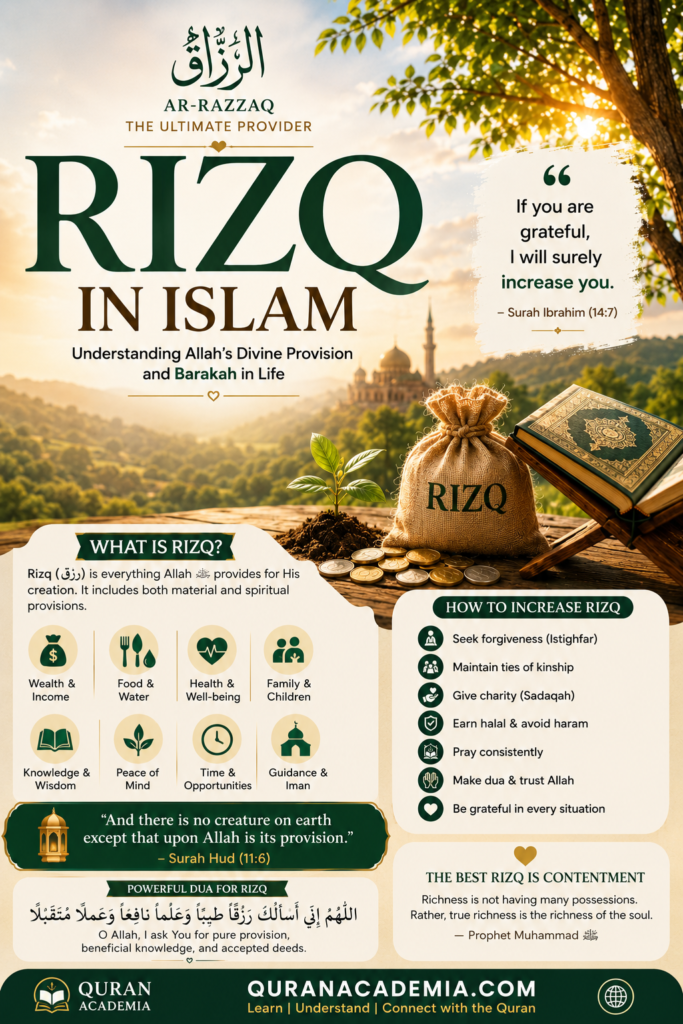
Rizq in Islam: Understanding Allah’s Divine Provision and Barakah
In Islam, the concept of Rizq (رزق) goes far beyond money, salary, or worldly possessions. Rizq is every blessing that Allah ﷻ provides to His creation — wealth, health, family, peace, knowledge, faith, opportunities, and even the air we breathe. Many Muslims today struggle with anxiety about finances, careers, and the future. However, the Quran and Sunnah teach us that our sustenance is written by Allah long before we are born.
This article explores the meaning of Rizq in Islam, how to increase barakah in Rizq, powerful Quranic verses and Hadith about sustenance, and practical Islamic habits that attract blessings into our lives.
What is Rizq in Islam?
The Arabic word Rizq means sustenance, provision, or blessings granted by Allah ﷻ. Rizq includes both material and spiritual provisions.
Examples of Rizq:
- Wealth and income
- Food and water
- Good health
- Righteous spouse and children
- Knowledge and wisdom
- Peace of mind
- Time and opportunities
- Guidance and iman
Many people mistakenly think Rizq only means money, but Islam teaches that true Rizq includes everything beneficial granted by Allah.
Allah ﷻ says in the Quran:
“And there is no creature on earth except that upon Allah is its provision.”
— Surah Hud (11:6)
This verse reminds believers that Allah alone is the Provider of every living being.
Allah is Ar-Razzaq — The Ultimate Provider
One of the beautiful names of Allah is Ar-Razzaq (الرزاق), meaning The Supreme Provider.
Allah says:
“Indeed, Allah is the Continual Provider, the firm possessor of strength.”
— Surah Adh-Dhariyat (51:58)
No employer, business, or customer truly provides Rizq. They are merely means created by Allah. Understanding this brings peace to the heart and removes excessive fear about worldly matters.
When a believer realizes that sustenance comes from Allah alone, they stop chasing wealth through haram means and begin trusting Allah’s wisdom.
Rizq is Already Written Before Birth
One of the most comforting teachings in Islam is that every person’s Rizq is already decreed.
The Prophet ﷺ said:
“The soul will not die until it has received all its provision and completed its lifespan.”
— Ibn Majah
This Hadith teaches Muslims not to panic over Rizq. What Allah has written for you will reach you, even if it seems delayed.
However, Islam also commands believers to work hard, seek halal income, and make effort while relying upon Allah.
The Relationship Between Tawakkul and Rizq
Tawakkul means trusting Allah while taking the necessary means.
The Prophet Muhammad ﷺ said:
“If you relied upon Allah with true reliance, He would provide for you as He provides for the birds: they leave in the morning hungry and return full.”
— Tirmidhi
Notice that birds still leave their nests and search for food. Islam does not teach laziness. Instead, Muslims should:
- Work honestly
- Pursue halal earnings
- Improve their skills
- Make dua consistently
- Trust Allah’s timing
True tawakkul combines effort with complete faith in Allah.
How to Increase Rizq in Islam
Many Muslims ask: How can I increase my Rizq according to Islam? The Quran and Sunnah provide several powerful ways.
1. Seeking Forgiveness (Istighfar)
Istighfar is one of the greatest causes of increased sustenance.
Allah says:
“Ask forgiveness of your Lord. Indeed, He is ever a Perpetual Forgiver. He will send rain from the sky upon you in showers and give you increase in wealth and children.”
— Surah Nuh (71:10–12)
Regularly saying:
- Astaghfirullah
- Astaghfirullah wa atubu ilayh
can bring immense barakah into life.
2. Maintaining Family Ties
Islam strongly emphasizes maintaining relationships with relatives.
The Prophet ﷺ said:
“Whoever wishes that his provision be increased and his life be extended, let him maintain the ties of kinship.”
— Bukhari & Muslim
Cutting family ties can remove blessings from Rizq, while kindness toward relatives opens doors of mercy.
3. Giving Charity (Sadaqah)
Many people fear losing money through charity, but Islam teaches the opposite.
Allah says:
“Whatever you spend in charity, He will replace it.”
— Surah Saba (34:39)
Sadaqah purifies wealth and attracts barakah. Even small acts of charity can bring enormous blessings.
4. Halal Earnings Bring Barakah
Halal Rizq is one of the foundations of a blessed life.
The Prophet ﷺ warned against earning through:
- Interest (riba)
- Fraud
- Deception
- Bribery
- Dishonesty
Even if haram wealth appears abundant, it lacks peace and barakah.
A small halal income with barakah is better than large unlawful wealth.
5. Performing Salah Consistently
Prayer strengthens the connection between a believer and Allah.
Allah says:
“And command your family to prayer and be steadfast therein. We ask not of you provision; We provide for you.”
— Surah Taha (20:132)
Salah brings spiritual peace, discipline, and divine assistance.
Barakah: The Secret of True Rizq
Two people may earn the same amount of money, but one lives peacefully while the other constantly struggles. The difference is barakah.
What is Barakah?
Barakah means divine blessing and increase from Allah.
Signs of barakah include:
- Peace in the home
- Contentment
- Health and happiness
- Money lasting longer
- Productive time
- Ease in daily affairs
Without barakah, even great wealth feels empty.
Common Misunderstandings About Rizq
1. Rizq Only Means Money
Islam teaches that health, iman, family, and peace are also Rizq.
2. Wealth Equals Allah’s Pleasure
Some wealthy people may actually be tested through their wealth.
3. Poverty Means Allah Dislikes Someone
Many prophets and righteous people lived simple lives.
True success is closeness to Allah, not worldly status.
Powerful Duas for Rizq
Dua for Halal Rizq
“Allahumma inni as’aluka rizqan tayyiban wa ‘ilman nafi‘an wa ‘amalan mutaqabbalan.”
“O Allah, I ask You for pure provision, beneficial knowledge, and accepted deeds.”
Dua for Ease and Provision
“Hasbunallahu wa ni‘mal wakeel.”
“Allah is sufficient for us, and He is the best disposer of affairs.”
Reciting these duas regularly strengthens reliance on Allah.
Lessons About Rizq from the Quran
The Quran repeatedly reminds believers that Allah controls provision.
Allah Tests People Through Rizq
Some are tested with abundance while others are tested with difficulty.
Allah says:
“And We test you with evil and with good as trial.”
— Surah Al-Anbiya (21:35)
Gratitude Increases Blessings
Allah promises increase to those who are grateful.
“If you are grateful, I will surely increase you.”
— Surah Ibrahim (14:7)
Shukr (gratitude) is one of the greatest keys to barakah.
How Modern Muslims Can Strengthen Their Rizq Spiritually
In today’s fast-paced world, many people suffer from stress about finances and success. Islam teaches balance between dunya and akhirah.
Practical Steps:
- Start the day with Fajr prayer
- Recite Quran daily
- Avoid haram income
- Give regular charity
- Make consistent dua
- Trust Allah’s decree
- Practice gratitude
- Avoid envy and comparison
A heart attached to Allah finds peace even during financial hardship.
The Best Rizq is Contentment
The Prophet ﷺ said:
“Richness is not having many possessions. Rather, true richness is the richness of the soul.”
— Bukhari & Muslim
Contentment (qana’ah) is among the greatest treasures a believer can possess.
A person with little but contentment may be richer in the sight of Allah than someone with immense wealth but endless greed.
Final Thoughts on Rizq in Islam
Rizq is one of the most beautiful and comforting concepts in Islam. Allah ﷻ has already written every person’s sustenance with perfect wisdom and mercy. While Muslims must work hard and seek halal means, ultimate reliance should always remain upon Allah.
True Rizq is not measured only by wealth, but by:
- Barakah
- Peace of mind
- Strong faith
- Gratitude
- Halal blessings
- Nearness to Allah
May Allah ﷻ grant us halal Rizq, abundant barakah, sincere tawakkul, and hearts filled with gratitude. Ameen.