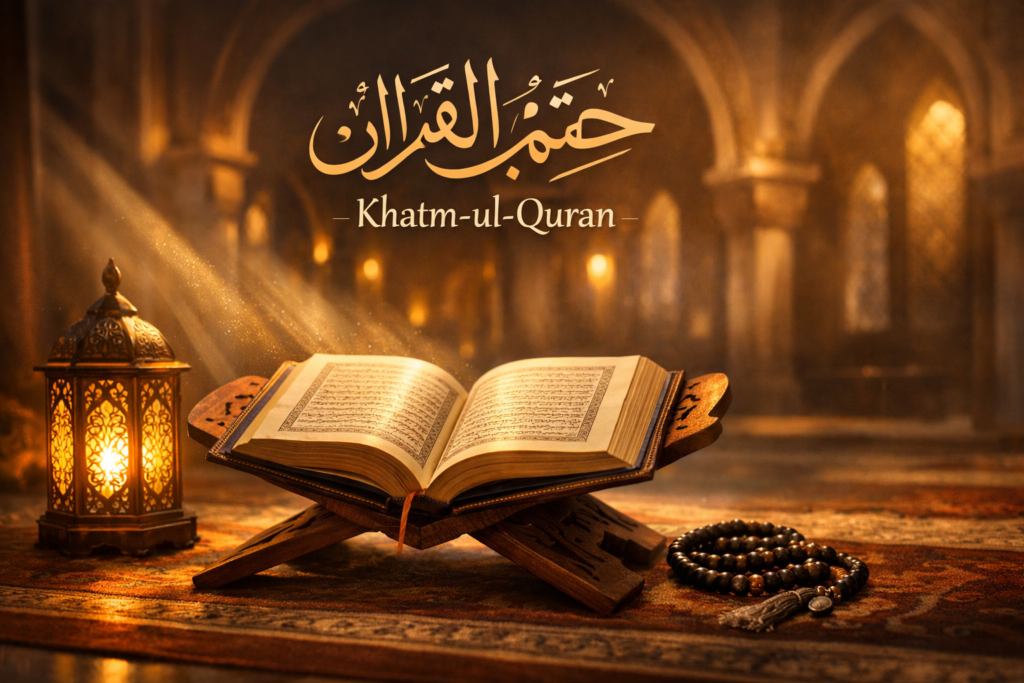
Khatm-ul-Quran: The Spiritual Journey of Completing the Holy Quran
The Holy Quran is the divine revelation sent by Allah as guidance for humanity. For Muslims, reciting and reflecting upon the Quran is one of the most rewarding acts of worship. Among the most cherished spiritual achievements in Islam is Khatm-ul-Quran, the completion of the entire Quran through recitation.
Khatm-ul-Quran is not merely finishing the recitation of the Quran from beginning to end; it represents a deep spiritual connection with Allah, reflection upon His words, and a renewal of faith. Muslims across the world strive to complete the Quran, especially during the blessed month of Ramadan, when rewards are multiplied and hearts are more inclined toward worship.
This article explores the meaning, virtues, significance, methods, and spiritual benefits of Khatm-ul-Quran, supported by authentic references from the Quran and Hadith.
What is Khatm-ul-Quran?
Khatm-ul-Quran literally means “completion of the Quran.” It refers to finishing the recitation of all 114 chapters (Surahs) of the Quran from beginning to end.
This act can be done:
-
Individually
-
In congregation
-
During prayers such as Taraweeh
-
As part of a personal spiritual routine
Many Muslims aim to complete the Quran once, twice, or even multiple times during Ramadan as an act of devotion and spiritual purification.
The Importance of the Quran in Islam
Before understanding Khatm-ul-Quran, it is important to recognize the status of the Quran in Islam.
The Quran is the final revelation sent by Allah to humanity through **Prophet Muhammad ﷺ via the angel **Jibreel (Gabriel).
Allah says in the Quran:
“Indeed, this Qur’an guides to that which is most suitable and gives good tidings to the believers who do righteous deeds.”
(Quran 17:9)
The Quran serves as:
-
A complete guide for life
-
A source of spiritual healing
-
A criterion between right and wrong
-
A reminder of the Hereafter
Completing the recitation of this sacred book is therefore an act filled with immense blessings.
Virtues of Reciting the Quran
The reward for reciting the Quran is extraordinary. Every letter recited brings immense reward.
The Prophet ﷺ said:
“Whoever recites a letter from the Book of Allah will receive one good deed, and each good deed is multiplied by ten.”
(Tirmidhi)
This means even a small portion of recitation earns great rewards. Completing the entire Quran multiplies these blessings immensely.
The Special Significance of Khatm-ul-Quran in Ramadan
The practice of completing the Quran is especially emphasized during Ramadan, the month in which the Quran was first revealed.
Allah says:
“The month of Ramadan in which the Quran was revealed as guidance for mankind.”
(Quran 2:185)
During Ramadan:
-
Muslims dedicate more time to Quran recitation
-
Mosques organize Taraweeh prayers with full Quran recitation
-
Families encourage children to engage with the Quran
-
Individuals aim to complete at least one Khatm
The tradition of completing the Quran during Ramadan traces back to the Prophet ﷺ, who reviewed the Quran with Jibreel (AS) every Ramadan.
Khatm-ul-Quran in Taraweeh Prayers
One of the most beloved traditions during Ramadan is listening to the entire Quran during Taraweeh prayers.
In many mosques around the world:
-
The Imam recites one Juz (section) per night
-
The full Quran is completed in 29 or 30 nights
This communal act strengthens the connection of the Muslim community with the Quran.
Spiritual Benefits of Completing the Quran
Completing the Quran provides numerous spiritual benefits.
1. Strengthens Faith (Iman)
The Quran constantly reminds believers of Allah’s mercy, power, and wisdom. Regular recitation strengthens faith and deepens one’s connection with Allah.
2. Brings Inner Peace
Allah says:
“Verily, in the remembrance of Allah do hearts find rest.”
(Quran 13:28)
Reciting the Quran regularly brings tranquility, clarity, and emotional healing.
3. Intercession on the Day of Judgment
The Prophet ﷺ said:
“Recite the Quran, for it will come as an intercessor for its companions on the Day of Resurrection.”
(Muslim)
Those who regularly recite and complete the Quran will receive its intercession in the Hereafter.
4. Multiplied Rewards
Completing the Quran involves reciting over 600 pages and thousands of verses, meaning millions of rewards according to the hadith about each letter bringing ten good deeds.
How Long Does It Take to Complete the Quran?
The Quran is divided into 30 sections called Juz to make recitation easier.
Here are common schedules for completing the Quran:
1. One Month Completion
-
Recite 1 Juz daily
-
Ideal for Ramadan
2. Two Week Completion
-
Recite 2 Juz daily
3. One Week Completion
-
Recite about 4–5 Juz daily
4. Three-Day Completion
Some companions of the Prophet ﷺ were able to complete the Quran within three days.
Best Practices for Khatm-ul-Quran
Completing the Quran should be done with sincerity and reflection.
1. Recite with Understanding
Allah encourages reflection on the Quran.
“Do they not reflect upon the Quran?”
(Quran 47:24)
Reading translation and tafsir enhances understanding.
2. Maintain Proper Tajweed
Reciting with correct pronunciation preserves the beauty and meaning of the Quran.
Learning Tajweed ensures:
-
Correct articulation
-
Respect for the divine text
-
Accurate recitation
3. Be Consistent
Even small amounts of daily recitation lead to completing the Quran over time.
The Prophet ﷺ said:
“The most beloved deeds to Allah are those that are consistent, even if small.”
(Bukhari)
4. Make Dua After Completion
Many scholars recommend making a special dua after completing the Quran, asking Allah for forgiveness, guidance, and blessings.
Khatm-ul-Quran and the Early Muslims
The companions of the Prophet ﷺ had a deep love for the Quran.
Some examples include:
-
Abdullah ibn Masud – known for his deep understanding of the Quran
-
Uthman ibn Affan – reported to recite the Quran frequently in prayer
-
Ali ibn Abi Talib – emphasized reflecting on Quranic verses
Their lives demonstrate the central role the Quran played in shaping their character and spirituality.
Common Mistakes When Doing Khatm-ul-Quran
While completing the Quran is a noble goal, some mistakes should be avoided.
1. Rushing Without Understanding
The Quran should not be recited hurriedly without reflection.
2. Ignoring Tajweed
Incorrect pronunciation can change meanings.
3. Treating Completion as the Only Goal
The purpose is guidance and transformation, not just finishing pages.
How to Encourage Khatm-ul-Quran in Families
Families can cultivate love for the Quran through simple practices:
-
Daily family Quran reading sessions
-
Encouraging children to memorize short surahs
-
Listening to Quran recitations together
-
Setting Ramadan goals for completing the Quran
These habits create a Quran-centered home environment.
The Ultimate Goal of the Quran
Completing the Quran is an achievement, but the ultimate purpose is to live by its teachings.
The Quran teaches:
-
Justice
-
Compassion
-
Patience
-
Gratitude
-
Worship of Allah alone
When Muslims embody these values, they truly honor the message of the Quran.
Conclusion
Khatm-ul-Quran is one of the most spiritually rewarding acts in Islam. It reflects a Muslim’s dedication to the words of Allah and strengthens the bond between the believer and their Creator.
Whether completed during Ramadan, through Taraweeh prayers, or through consistent daily recitation, finishing the Quran brings immense blessings, peace, and spiritual elevation.
However, the true success lies not only in completing the Quran but in understanding its message and applying its guidance in daily life.
May Allah grant us the ability to recite, understand, and live by the Quran and allow us to complete many Khatm-ul-Quran with sincerity and devotion.