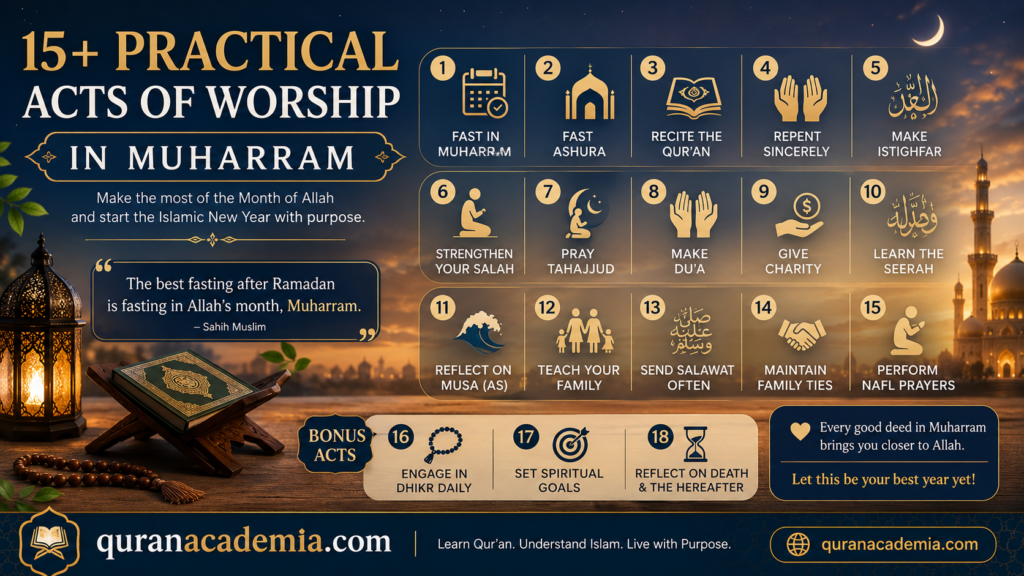
15+ Practical Acts of Worship in Muharram
Muharram is not merely a month of historical remembrance; it is a month of action, worship, and spiritual renewal. Since it is one of the four sacred months and the Prophet ﷺ specifically encouraged fasting during it, every Muslim should strive to maximize its blessings.
Whether you are a student, working professional, parent, or retiree, these practical acts of worship can help you draw closer to Allah and begin the Islamic New Year with purpose.
1. Fast During Muharram
The greatest Sunnah associated with Muharram is fasting.
The Messenger of Allah ﷺ said:
“The best fasting after Ramadan is fasting in Allah’s month, Muharram.”
(Sahih Muslim)
You may fast:
- The 9th and 10th of Muharram
- The 10th and 11th of Muharram
- Three days each week
- Mondays and Thursdays
- Any additional days you are able
Every fast is an opportunity to earn immense rewards and strengthen your relationship with Allah.
2. Fast the Day of Ashura
The 10th of Muharram is among the most blessed days of the year.
The Prophet ﷺ said:
“Fasting the Day of Ashura expiates the sins of the previous year.”
(Sahih Muslim)
One day of sincere fasting can erase a year’s worth of minor sins by Allah’s mercy.
Few voluntary acts carry such an extraordinary reward.
3. Increase Your Daily Qur’an Recitation
Muharram is an excellent opportunity to reconnect with the Qur’an.
Allah says:
“Indeed, this Qur’an guides to that which is most suitable.”
(Surah Al-Isra 17:9)
Practical goals include:
- One page after every prayer
- One juz per week
- Daily tafsir study
- Memorizing short surahs
At QuranAcademia.com, we encourage Muslims to start the Islamic New Year with a fresh commitment to learning and understanding the Qur’an.
4. Make Sincere Tawbah (Repentance)
A new Hijri year is the perfect time for self-accountability.
Allah says:
“And turn to Allah in repentance, all of you, O believers, that you might succeed.”
(Surah An-Nur 24:31)
Ask yourself:
- What sins have I not repented from?
- Which habits are distancing me from Allah?
- What changes can I make this year?
Sincere repentance requires:
- Regret
- Stopping the sin
- Resolving not to return to it
- Seeking forgiveness
Muharram is an ideal time to begin again.
5. Increase Istighfar
One of the easiest and most rewarding acts of worship is seeking forgiveness.
The Prophet ﷺ sought forgiveness over seventy times daily despite being free from sin.
Try reciting:
Astaghfirullah wa atubu ilayh
(I seek Allah’s forgiveness and repent to Him)
100 times each day.
Benefits include:
- Forgiveness of sins
- Relief from hardship
- Increased provision
- Inner peace
6. Strengthen Your Five Daily Prayers
Many Muslims make worldly resolutions at the beginning of a new year.
Muharram is the time to make spiritual resolutions.
Start by evaluating:
- Are all prayers performed on time?
- Do I pray in congregation when possible?
- Am I praying with concentration?
The first deed to be judged on the Day of Judgment is Salah.
Strengthening prayer should be every Muslim’s top priority.
7. Pray Tahajjud
Muharram is a beautiful month to establish the habit of night prayer.
Allah praises those who:
“Forsake their beds to invoke their Lord in fear and hope.”
(Surah As-Sajdah 32:16)
Even praying two rak’ahs before Fajr can transform your relationship with Allah.
The quiet moments before dawn are among the most spiritually powerful times for worship.
8. Make Abundant Du’a
The beginning of a new Islamic year is an opportunity to ask Allah for:
- Guidance
- Forgiveness
- Protection
- Rizq
- Good health
- Righteous children
- Success in this life and the next
The Prophet ﷺ said:
“Du’a is worship.”
(Tirmidhi)
Create a personal du’a list and make it a daily practice throughout Muharram.
9. Give Charity Generously
Charity extinguishes sins and brings immense blessings.
The Prophet ﷺ said:
“Charity extinguishes sin as water extinguishes fire.”
(Tirmidhi)
Ways to give include:
- Feeding the poor
- Supporting Islamic education
- Sponsoring Qur’an students
- Helping widows and orphans
- Building wells
- Supporting masjid projects
Even a small amount given consistently can carry tremendous rewards.
10. Learn the Seerah of the Prophet ﷺ
Muharram marks the beginning of the Hijri year, which was established around the Hijrah of the Prophet ﷺ.
Therefore, this month is an ideal time to study:
- The migration to Madinah
- The sacrifices of the Companions
- The establishment of the Muslim community
- Lessons in trust and perseverance
The Hijrah teaches Muslims that faith often requires sacrifice before success.
11. Reflect on the Story of Musa (AS)
Ashura commemorates Allah’s rescue of Prophet Musa (AS) and his followers.
Reflect upon:
- Allah’s power
- Patience during hardship
- Standing against oppression
- Trusting Allah during impossible situations
When Musa (AS) stood before the sea with Pharaoh’s army behind him, Allah made a way where none existed.
This story remains relevant for every believer facing challenges today.
12. Teach Your Family About Muharram
Parents should use Muharram to educate children about:
- The Islamic calendar
- Sacred months
- Ashura
- The Prophets
- The importance of fasting
Children who understand Islamic history develop stronger Islamic identities and deeper love for their faith.
Family learning sessions can become a cherished annual tradition.
13. Increase Salawat Upon the Prophet ﷺ
One of the most beloved forms of worship is sending blessings upon the Messenger of Allah ﷺ.
Allah says:
“Indeed, Allah and His angels send blessings upon the Prophet.”
(Surah Al-Ahzab 33:56)
Recite frequently:
Allahumma salli ‘ala Muhammad wa ‘ala aali Muhammad
The Prophet ﷺ promised immense rewards for those who regularly send salawat upon him.
14. Maintain Family Ties
The Prophet ﷺ strongly encouraged maintaining family relationships.
Muharram is a good opportunity to:
- Call relatives
- Visit parents
- Reconcile disputes
- Forgive family members
- Strengthen kinship bonds
The Prophet ﷺ said:
“Whoever wishes that his provision be increased and his life extended should maintain family ties.”
(Sahih al-Bukhari)
15. Perform Extra Voluntary Prayers
Nafl prayers help compensate for deficiencies in obligatory prayers.
Consider:
- Duha prayer
- Tahajjud
- Two rak’ahs after wudu
- Additional Sunnah prayers
Every prostration elevates a believer’s status before Allah.
Muharram is an excellent time to increase these acts.
16. Engage in Daily Dhikr
Dhikr softens the heart and strengthens faith.
Recommended adhkar include:
Tasbih
SubhanAllah
Tahmid
Alhamdulillah
Takbir
Allahu Akbar
Tahlil
La ilaha illallah
The Prophet ﷺ frequently encouraged these phrases due to their immense reward.
Set a daily target and remain consistent throughout Muharram.
17. Set Spiritual Goals for the New Hijri Year
Muharram should inspire believers to plan for their akhirah, not merely their dunya.
Examples of meaningful goals:
- Complete one Qur’an reading
- Memorize a new surah
- Establish Tahajjud
- Fast regularly
- Improve character
- Increase charity
- Learn Arabic
- Study tafsir
Written goals often lead to greater consistency and accountability.
18. Reflect on Death and the Hereafter
Muharram reminds us that another year has passed from our lives.
Hasan Al-Basri رحمه الله said:
“O son of Adam, you are nothing but a collection of days. Whenever a day passes, part of you passes away.”
Ask yourself:
- Am I closer to Allah than last year?
- Have I increased in knowledge?
- Have I repented sincerely?
- What legacy am I leaving behind?
Reflection upon the Hereafter motivates sincere worship and righteous action.
A New Beginning with Allah
Muharram is not simply the first month of the Islamic calendar—it is an invitation from Allah to renew faith, seek forgiveness, increase worship, and begin the year with purpose.
Whether through fasting Ashura, reciting Qur’an, making du’a, giving charity, or strengthening family ties, every act performed sincerely during this sacred month becomes a means of drawing closer to Allah.
The greatest lesson of Muharram is that every believer can start again. No matter how many mistakes were made in the previous year, Allah’s mercy remains vast, His door of repentance remains open, and His guidance remains available to those who seek Him.