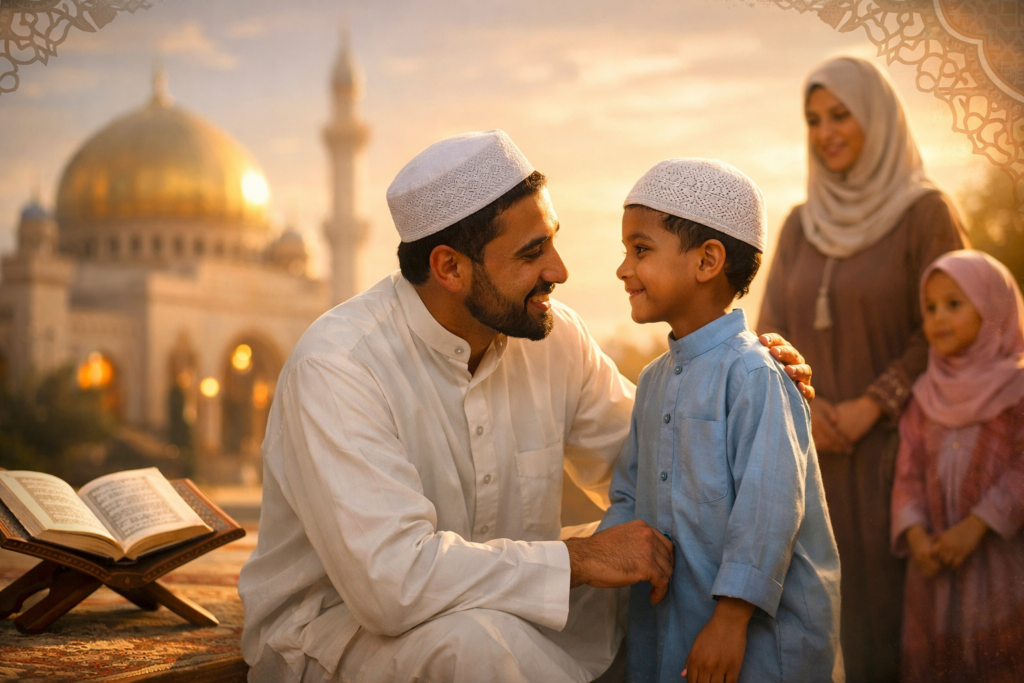
Respect Your Kids in Islam: A Complete Guide to Raising Emotionally and Spiritually Strong Children
Rethinking Parenting Through the Lens of Islam
In many cultures today, parenting is often shaped by authority, control, and expectations of obedience. Children are expected to “respect elders,” follow instructions without question, and conform to societal norms. While discipline and structure are important, Islam offers a far more balanced and profound approach—one rooted in mercy, dignity, and mutual respect.
One of the most powerful yet often neglected principles in Islamic parenting is this:
Respect is not one-sided. Parents must respect their children just as children are taught to respect their parents.
This concept is not modern—it is deeply embedded in the Qur’an and the Sunnah. When understood and practiced correctly, it transforms families, strengthens emotional bonds, and nurtures children who are confident, compassionate, and deeply connected to Allah ﷻ.
This comprehensive guide explores the Islamic perspective on respecting children, supported by Qur’anic guidance, Prophetic examples, and practical strategies for modern Muslim parents.
Understanding the Concept of “Amanah” (Trust)
Before diving into respect, we must understand how Islam views children.
Children are not:
- Extensions of our ego
- Tools for fulfilling our unachieved dreams
- Objects to control
Instead, they are:
Amanah (a trust) from Allah ﷻ
Allah says in the Qur’an:
“And know that your wealth and your children are but a trial…” (Qur’an 8:28)
This means:
- You are entrusted with their upbringing
- You will be accountable for how you treat them
- Your role is guidance, not domination
Respecting children begins when parents internalize this responsibility.
The Foundation: Mercy Before Authority
The Prophet Muhammad ﷺ redefined parenting through mercy.
He said:
“He is not one of us who does not show mercy to our young ones…” (Tirmidhi)
This hadith establishes a foundational rule:
Without mercy, parenting loses its Islamic essence.
Respect is an extension of mercy. When you respect your child:
- You acknowledge their emotions
- You validate their experiences
- You treat them as human beings with dignity
How the Prophet ﷺ Demonstrated Respect for Children
The Prophet ﷺ did not just preach kindness—he lived it. His interactions with children are powerful examples for every parent.
1. He Greeted Children First
Instead of ignoring or dismissing them, he would initiate greetings. This simple act shows:
- Children matter
- They are worthy of attention
2. He Listened to Them Attentively
He gave full attention even to young companions. He did not interrupt, mock, or dismiss their concerns.
This teaches:
Listening is one of the highest forms of respect.
3. He Showed Physical Affection
He kissed, hugged, and carried children.
When a man expressed surprise at this, the Prophet ﷺ responded:
“What can I do if Allah has removed mercy from your heart?” (Bukhari)
Affection is not weakness—it is Sunnah.
4. He Considered Their Feelings
Once, he shortened prayer upon hearing a baby cry, out of concern for the mother.
This shows:
- Children’s needs are important
- Parenting requires empathy
5. He Avoided Harshness
He never humiliated or degraded children.
This is critical today, where:
- Public scolding
- Emotional shaming
- Constant criticism
…are often normalized.
Why Respecting Your Children Matters
1. Builds Emotional Security
A respected child feels:
- Safe
- Valued
- Understood
This emotional stability leads to:
- Better behavior
- Stronger relationships
- Healthy self-esteem
2. Strengthens Their Relationship with Allah
Children often associate Islam with how their parents present it.
If parenting is:
- Harsh → Islam feels strict and heavy
- Loving → Islam feels beautiful and comforting
Respectful parenting helps children:
- Love their faith
- Practice willingly
- Develop sincere ایمان
3. Encourages Open Communication
When children feel respected:
- They share their thoughts
- They ask questions
- They seek guidance
Without respect, children:
- Hide mistakes
- Fear judgment
- Disconnect emotionally
4. Prevents Rebellion and Resentment
Strict, disrespectful parenting often leads to:
- Secretive behavior
- Anger
- Rebellion in teenage years
Respect reduces this risk significantly.
5. Shapes Their Future Behavior
Children learn by observation.
If you:
- Respect them → They respect others
- Humiliate them → They repeat the same behavior
Practical Ways to Respect Your Children (Islamic Guidelines)
1. Speak with Kindness and Wisdom
Allah commands:
“And speak to people good words…” (Qur’an 2:83)
This includes your children.
Avoid:
- “You’re useless”
- “Why can’t you be like others?”
Instead say:
- “I know you can do better”
- “Let’s work on this together”
Words shape identity.
2. Listen Without Interrupting
When your child speaks:
- Stop what you’re doing
- Make eye contact
- Show interest
Even small concerns matter to them.
Respecting their voice builds confidence.
3. Avoid Public Humiliation
Correcting a child in front of others damages:
- Self-respect
- Confidence
Islam emphasizes protecting dignity.
Discipline should be:
- Private
- Calm
- Constructive
4. Validate Their Emotions
Instead of saying:
- “Stop crying, it’s nothing”
Say:
- “I understand you’re upset”
This teaches emotional intelligence.
5. Give Them Age-Appropriate Choices
Respect includes autonomy.
Let them:
- Choose clothes (within modesty)
- Make small decisions
- Express preferences
This builds independence.
6. Be Fair Among Children
The Prophet ﷺ strongly warned against favoritism.
Treating children equally shows:
- Justice
- Respect
- Integrity
7. Apologize When You’re Wrong
Many parents struggle with this.
But saying:
- “I’m sorry”
…teaches:
- Humility
- Accountability
It strengthens trust.
8. Spend Quality Time
Respect is shown through presence.
Give your children:
- Undivided attention
- Meaningful conversations
- Shared experiences
Time is love in action.
9. Teach, Don’t Control
Instead of:
- “Because I said so”
Explain:
- “This is important because Allah loves this”
This builds understanding, not blind obedience.
10. Make Du’a for Them
Pray for:
- Their guidance
- Their success
- Their ایمان
Your du’a reflects your care and responsibility.
Balancing Respect and Discipline
Respect does not mean:
- No rules
- No boundaries
- No consequences
Islam encourages balance:
| Aspect | Approach |
|---|---|
| Discipline | Firm but fair |
| Communication | Gentle and clear |
| Authority | Guided by mercy |
The goal is:
To raise children who obey Allah—not just parents.
Common Parenting Mistakes to Avoid
1. Comparing Children
- “Look at your cousin…”
This damages self-worth.
2. Shouting Frequently
Constant yelling creates fear, not respect.
3. Ignoring Emotional Needs
Providing food and education is not enough.
Children need:
- Love
- Attention
- Validation
4. Over-Controlling Behavior
Micromanaging leads to:
- Weak decision-making
- Lack of confidence
5. Using Religion as a Threat
- “Allah will punish you”
This creates fear-based faith.
Instead, teach love of Allah.
Long-Term Impact of Respectful Parenting
When children are raised with respect, they grow into:
1. Confident Individuals
They believe in themselves.
2. Emotionally Intelligent Adults
They understand and manage emotions.
3. Strong Believers
They connect with Islam sincerely.
4. Respectful Members of Society
They treat others with dignity.
5. Loving Children to Their Parents
Respect given is respect returned.
The Spiritual Reward for Parents
Parenting is an عبادہ (act of worship).
Every:
- Kind word
- Gentle correction
- Loving moment
…is rewarded by Allah.
The Prophet ﷺ said:
“Each of you is a shepherd, and each of you is responsible for his flock.” (Bukhari)
Your children are your flock.
A Reflection for Parents
Ask yourself:
- Do my children feel safe talking to me?
- Do I listen more than I speak?
- Do I correct with love or anger?
- Do I model the behavior I expect?
Parenting is not about perfection—it’s about intention and effort.
Conclusion: Raising the Next Generation with Ihsan (Excellence)
Respecting your children is not optional in Islam—it is essential.
It is:
- A reflection of your character
- A fulfillment of your responsibility
- A path to raising righteous نسل (generation)
The Prophet ﷺ showed us that:
The strongest homes are built on mercy, respect, and love.
When you respect your children:
- You nurture their hearts
- You strengthen their faith
- You prepare them for both dunya and akhirah