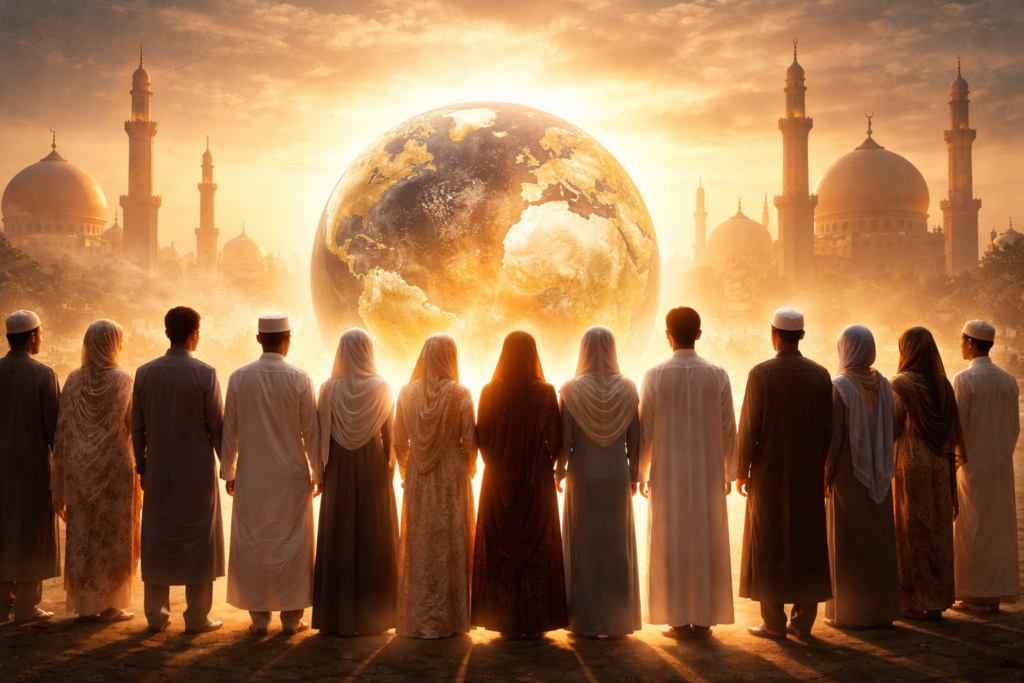
Muslim Ummah Issues: Understanding the Challenges and the Path Toward Unity
The concept of the Muslim Ummah represents the global community of believers united by faith in Allah and the teachings of Islam. Regardless of nationality, ethnicity, language, or culture, Muslims are bound together by a shared belief in the message of **Prophet Muhammad ﷺ and the guidance of the **Qur’an.
Today, however, the Muslim Ummah faces numerous challenges—ranging from political conflicts and social divisions to economic struggles and misconceptions about Islam. These issues affect not only Muslim societies but also the perception of Islam globally.
Understanding the problems facing the Ummah and working collectively toward solutions is essential for preserving unity, justice, and the values taught by Islam.
This article explores the major issues affecting the Muslim Ummah today, their causes, and the Islamic guidance for overcoming them.
The Meaning of the Muslim Ummah in Islam
The term Ummah refers to the global community of Muslims united by faith.
Allah says in the Quran:
“Indeed, this Ummah of yours is one Ummah, and I am your Lord, so worship Me.”
(Quran 21:92)
This verse emphasizes that Muslims are meant to function as a single brotherhood, supporting each other spiritually, socially, and morally.
The Prophet ﷺ also described the unity of the Ummah with a powerful metaphor:
“The believers, in their mutual love, mercy, and compassion, are like one body. When one limb suffers, the whole body responds with sleeplessness and fever.”
(Bukhari & Muslim)
This teaching highlights the collective responsibility of Muslims to care for one another.
Major Issues Facing the Muslim Ummah Today
1. Lack of Unity Among Muslims
One of the most serious problems affecting the Ummah today is division. Differences in political opinions, sectarian disagreements, and cultural conflicts often create disunity among Muslims.
Allah clearly warns against division:
“And hold firmly to the rope of Allah all together and do not become divided.”
(Quran 3:103)
Islam encourages diversity of culture and language but strongly discourages division in faith and brotherhood.
Unity is essential for the strength and progress of the Ummah.
2. Misrepresentation and Islamophobia
Another major challenge is the widespread misunderstanding and misrepresentation of Islam in various parts of the world.
Islam is often portrayed inaccurately in media and political discourse, leading to fear and prejudice known as Islamophobia.
However, Islam teaches peace, compassion, and justice. The life of Prophet Muhammad ﷺ demonstrated mercy toward all people, regardless of their beliefs.
The Quran states:
“And We have not sent you, [O Muhammad], except as a mercy to the worlds.”
(Quran 21:107)
Educating people about the true teachings of Islam is essential to counter these misconceptions.
3. Social and Economic Challenges
Many Muslim communities around the world face poverty, unemployment, and lack of access to education.
Economic instability can lead to social problems such as:
-
Limited access to quality education
-
Poor healthcare systems
-
Lack of opportunities for youth
Islam strongly emphasizes social justice and economic fairness.
One of the pillars of Islam, Zakat, was established specifically to support the poor and reduce economic inequality.
4. Political Conflicts in Muslim Regions
Various parts of the Muslim world have experienced political instability and conflict for decades.
These conflicts often lead to:
-
Humanitarian crises
-
Displacement of communities
-
Loss of education and economic opportunities
Islam teaches justice and fairness in governance.
Allah commands:
“Indeed, Allah commands justice and good conduct.”
(Quran 16:90)
Leaders and societies must strive for justice, peace, and stability.
5. Decline in Islamic Knowledge
Another significant issue facing the Ummah is the decline in deep Islamic knowledge among some communities.
While access to information has increased through technology, authentic understanding of Islamic teachings sometimes becomes overshadowed by misinformation.
Islam places great importance on seeking knowledge.
The Prophet ﷺ said:
“Seeking knowledge is an obligation upon every Muslim.”
(Ibn Majah)
Reviving Islamic education is essential for the strength of the Ummah.
The Role of the Quran in Solving Ummah Issues
The Quran provides comprehensive guidance for addressing social, moral, and political challenges.
It teaches:
-
Justice and fairness
-
Compassion and mercy
-
Unity and brotherhood
-
Accountability before Allah
When Muslims return to the principles of the Quran, many societal issues can be addressed more effectively.
The Quran reminds believers:
“Indeed, Allah will not change the condition of a people until they change what is within themselves.”
(Quran 13:11)
This verse highlights the importance of self-improvement and collective responsibility.
Importance of Unity in the Muslim Ummah
Unity is one of the strongest themes in Islam.
The Prophet ﷺ consistently emphasized cooperation, compassion, and mutual support among Muslims.
Unity brings many benefits:
-
Strength and stability
-
Collective progress
-
Protection of Islamic values
-
Support during hardship
Without unity, communities become weaker and more vulnerable to internal and external challenges.
How Muslims Can Contribute to Strengthening the Ummah
Every Muslim has a role to play in strengthening the Ummah.
1. Strengthening Faith
Developing a strong relationship with Allah through prayer, Quran recitation, and remembrance helps create a morally strong society.
2. Promoting Education
Education—both religious and worldly—is essential for the development of Muslim communities.
Institutions such as Quran academies and Islamic learning centers play an important role in preserving authentic knowledge.
3. Supporting Charitable Initiatives
Islam encourages helping those in need through:
-
Zakat
-
Sadaqah
-
Community support programs
These acts reduce poverty and strengthen social bonds.
4. Promoting Positive Representation of Islam
Muslims can counter misconceptions by demonstrating the values of Islam through their behavior, kindness, and community engagement.
5. Encouraging Dialogue and Understanding
Constructive dialogue between communities and cultures helps reduce misunderstandings and promotes peaceful coexistence.
The Role of Youth in Reviving the Ummah
The youth represent the future of the Muslim Ummah.
Young Muslims have the potential to contribute through:
-
Education and innovation
-
Community leadership
-
Promoting Islamic values in modern societies
By combining faith with knowledge and responsibility, the younger generation can play a major role in shaping a stronger and more united Ummah.
Hope for the Future of the Muslim Ummah
Despite the challenges facing the Muslim world today, there are many reasons for hope.
Across the globe, Muslims continue to:
-
Establish educational institutions
-
Support humanitarian causes
-
Spread knowledge of Islam
-
Promote unity and compassion
The resilience and faith of the Muslim community remain strong.
Allah reminds believers:
“Indeed, with hardship comes ease.”
(Quran 94:6)
This promise encourages Muslims to remain patient and hopeful.
Conclusion
The Muslim Ummah faces numerous challenges in the modern world, including division, economic struggles, political conflicts, and misconceptions about Islam.
However, Islam provides clear guidance for overcoming these difficulties through unity, knowledge, justice, and compassion.
By returning to the teachings of the Quran and the example of Prophet Muhammad ﷺ, Muslims can work together to build stronger communities and address the issues facing the Ummah.
Every individual has a role in contributing to positive change—through education, charity, moral conduct, and sincere efforts to strengthen unity.
May Allah guide the Muslim Ummah toward greater unity, peace, and prosperity.